
The Complete Guide to Buying Pokémon Cards on eBay Safely
eBay is the deepest marketplace on earth for Pokémon singles. Almost any card from any set, English or Japanese, raw or graded, is listed there right now, often from dozens of sellers at once. That depth is exactly why it's the best place to build a collection, and also why it pays to know what you're doing before you check out.
The good news: buying safely on eBay is mostly a handful of habits. Vet the seller, read the listing carefully, keep your price expectations grounded, and know your protections. This guide walks through each of those, then shows how to turn a long want-list into a few smart orders instead of dozens of risky ones.
Vet the seller before you bid
The single most reliable predictor of a good transaction is the person you're buying from.
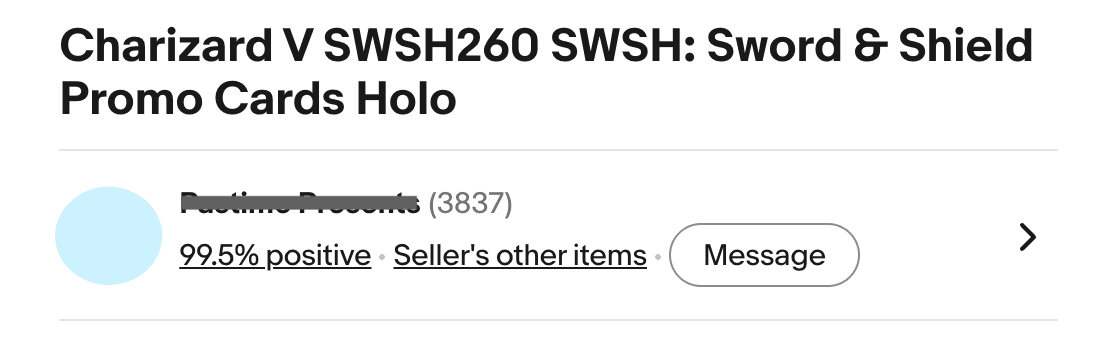
Before you commit to anything, check:
- Feedback percentage. Stick to sellers with high positive feedback, 98% or above is a sensible floor for cards. A percentage point or two matters more than it looks when you're buying something fragile and valuable.
- Feedback volume. 100% positive across five sales tells you far less than 99.4% across five thousand. Look for a real track record, not just a clean-but-tiny one.
- Recent reviews, not just the score. Skim the last page or two of feedback. Are buyers mentioning slow shipping, cards that didn't match the photos, or condition disputes? Patterns show up fast.
Rule of thumb: if a seller is brand new, has almost no feedback, and is listing a high-value card well below market, treat that as three yellow flags stacked on top of each other.
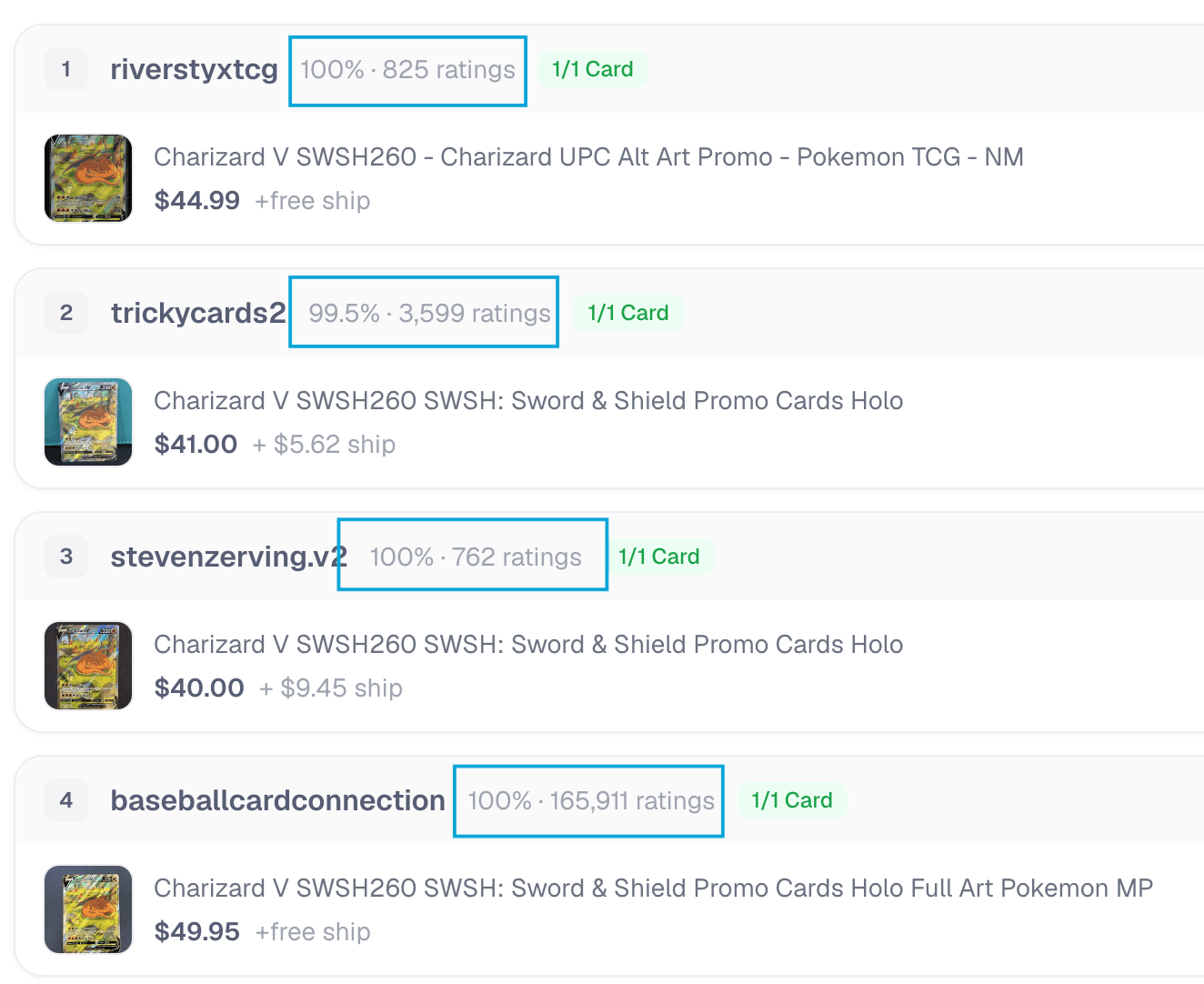
This is the part most buyers eyeball and then ignore under time pressure, which is exactly why Capyberry builds seller reputation into every ranking. When you search your list, the sellers we surface first are ones with a track record worth buying from, so you're not re-checking feedback on every single listing yourself.
Read the listing like a skeptic
A listing is a sales pitch. Your job is to find what it isn't showing you.
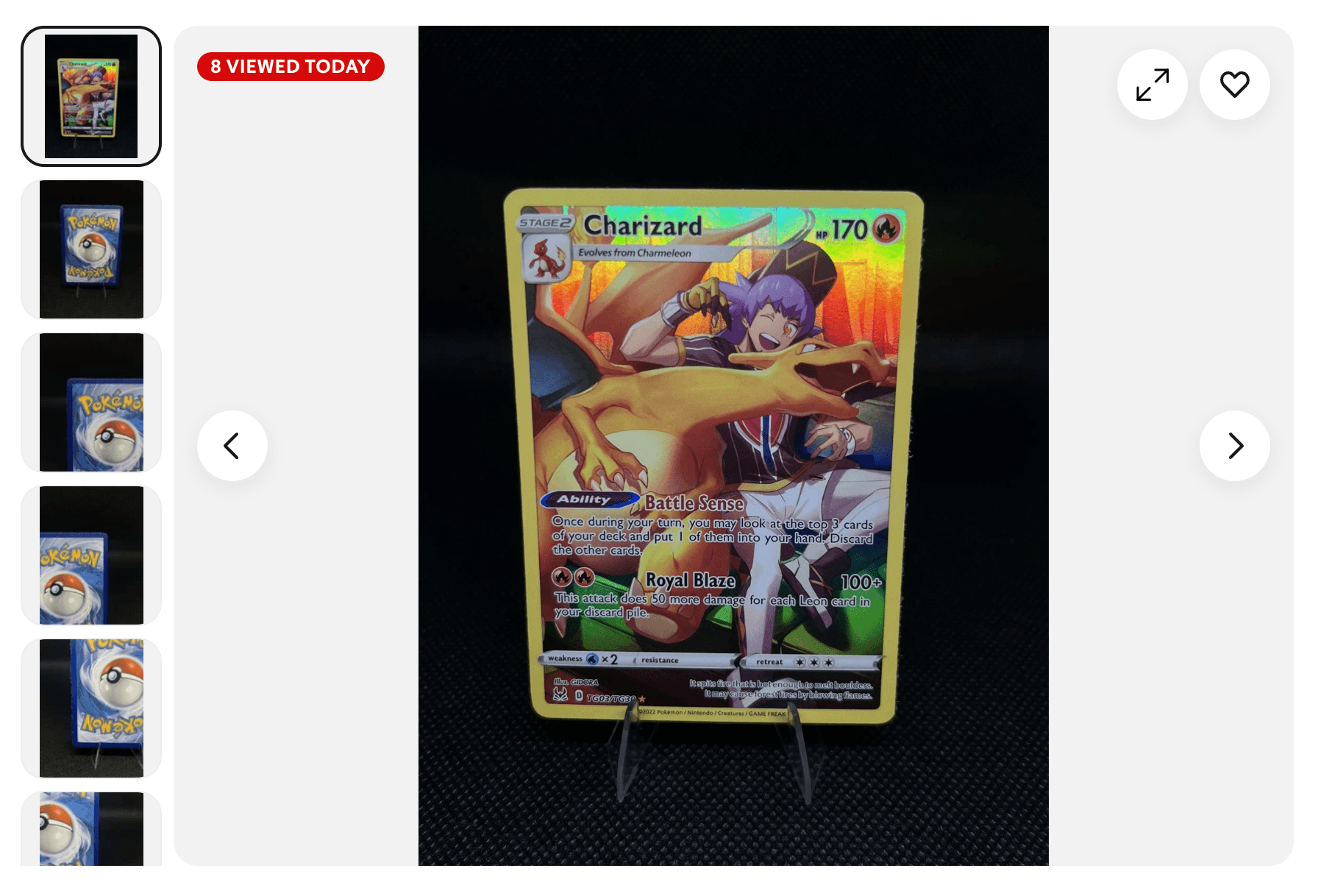
- Demand clear, detailed photos of the actual card. Not a stock image, not the card still sealed in a display case at an angle, but the real card, front and back, in good light. If the photos are blurry, cropped, or suspiciously flattering, ask for more before you buy.
- Watch the lighting. A card photographed in soft, even light with no visible edges or surface can be hiding whitening, scratches, or dinged corners. Some listings are shot in specific lighting precisely so blemishes don't show.
- Read the condition wording carefully. "Near Mint" means different things to different sellers, and "played" or "see photos" is doing a lot of work. If condition matters to you, the listing should describe it in words and show it in pictures.
If a description and the photos disagree (the text says "pack fresh" but the corners look soft), believe the photos, or walk away.
Keep your price expectations grounded
The oldest rule on eBay still holds: if a deal looks too good to be true, it probably is. A first-edition holo at a third of its going rate isn't a lucky find waiting for you; it's usually a bad photo, a wrong description, a swap waiting to happen, or a card that will never ship.
The defense is simple: know what a card actually sells for before you buy. Check recent sold listings for that exact card and condition, and cross-reference a price trend so you're not anchored to a single outlier.
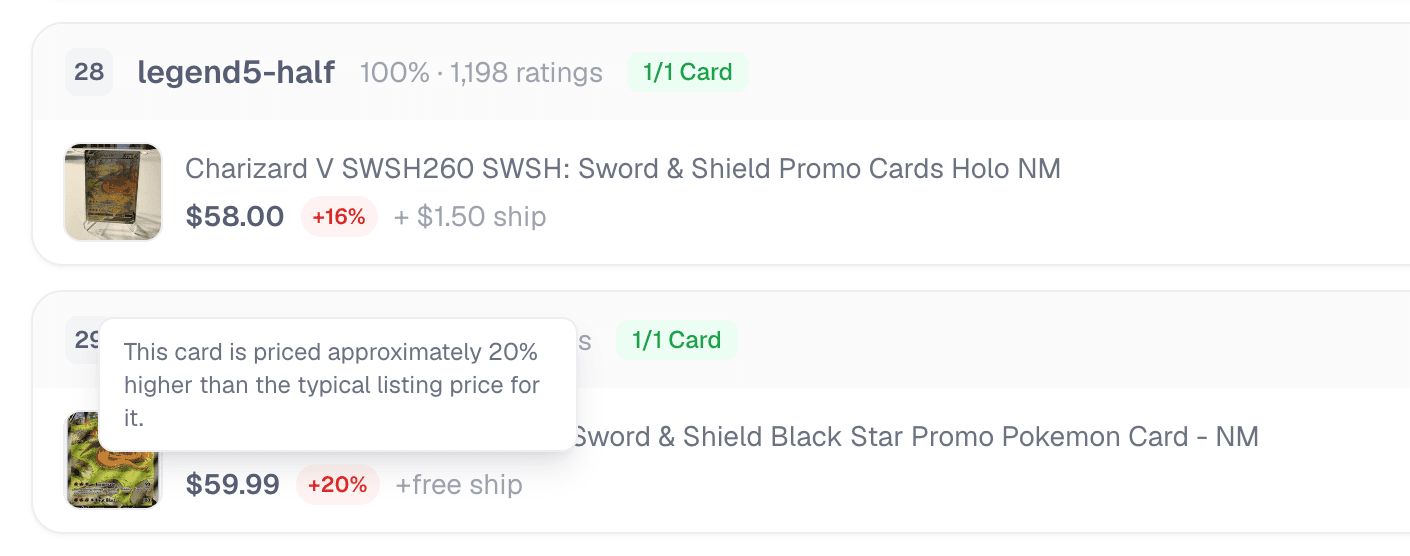
Capyberry does that check for you. When a listing is priced above the going rate, we flag it right in the results with a badge showing how far above market it is, so an overpriced card stands out before you ever click through.
Our market page also tracks Pokémon card prices and momentum (recent gainers and losers, 24-hour and 7-day moves), so you can tell the difference between a genuine dip and a listing that's too cheap for a reason.
You can also pull recent sold comps for a whole list of cards at once, with the suspiciously cheap sales flagged and left out of the averages. It's the same check vendors use when pricing a stack of cards at a card show. And for the cards you already own, you can scan them with your phone to check their value and keep a running total of your collection.
Raw vs. Graded, and eBay's Authentication Guarantee
For lower-value singles, raw (ungraded) cards are usually fine, and buying raw is how most collectors fill the bulk of a set. As value climbs, graded slabs (PSA, BGS, CGC, SGC) buy you certainty: the grade is verified, the card is sealed in a tamper-evident case, and condition is no longer a matter of interpretation.
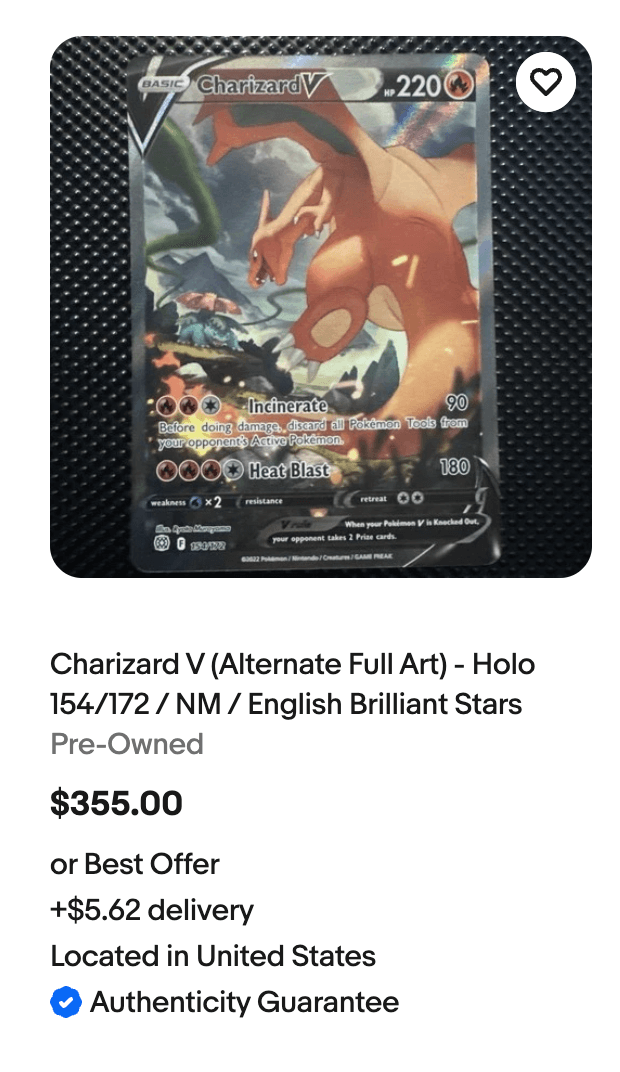
There's a second layer of protection worth knowing about. For eligible trading cards, eBay's Authentication Guarantee routes higher-value purchases through a third-party authenticator before the card reaches you. The threshold has historically kicked in around the $250 to $500 range depending on category, so on a pricey card the item is inspected for authenticity and condition in transit. On a big purchase, that's a meaningful safety net. Check whether a listing is covered before you buy.
Insist on proper packaging
More cards are ruined in the mail than by outright fraud. A card worth protecting should ship protected:
- A penny sleeve around the card,
- inside a top loader or rigid holder,
- ideally in a team bag so it can't slide out,
- inside a rigid mailer or a bubble mailer with cardboard.
For anything valuable, it's reasonable to expect tracking and, on the highest-value orders, signature confirmation. Plenty of experienced buyers record a video of themselves opening the package. An unbroken clip from sealed mailer to card in hand is powerful evidence if you ever need to open a dispute.
If something goes wrong
Even with every precaution, deals occasionally fall apart: a card that never ships, one that arrives damaged, or one that clearly isn't what was pictured (including the rare card-swap on a return). You have real recourse:
- Message the seller first. Many issues are honest mistakes and get resolved with a polite message and your photos or video.
- Open a case through eBay. If the card doesn't arrive or doesn't match the listing, eBay's Money Back Guarantee is designed to get you refunded. Paying with a linked PayPal or card adds another layer of buyer protection on top.
- Document everything. Clear photos of the card and packaging as it arrived, plus your unboxing video, are what turn a "he said, she said" into a decision in your favor. Escalate to eBay if the seller stalls.
The reason to buy from high-feedback sellers in the first place is that you rarely have to reach step two, but it's there when you need it.
Buy your whole list the smart way
Here's the trap almost every collector falls into: you buy singles one listing at a time, from whoever is cheapest on each card, and you pay shipping over and over. Ten cards from ten sellers can mean ten shipping fees, and ten separate chances for something to go wrong.
The fix is to think in orders, not individual cards. If one reputable seller carries eight of the ten cards on your list, buying those eight together almost always beats scraping the absolute lowest price on each one, once per-seller shipping is added up. Fewer orders also means fewer packages to track, fewer sellers to vet, and less exposure overall. (This is worth a deeper look on its own: see how to stop overpaying for shipping by consolidating orders across sellers, and the two ways to buy a whole want-list, cheapest total vs. fewest sellers.)
That's exactly what Capyberry is built to do. Paste your whole want-list (or a full decklist) and we search every card across eBay at once, group the results by seller, and rank the sellers who can fill the most of your list for the lowest total cost, factoring in reputation and per-seller shipping. Instead of two dozen tabs and a spreadsheet, you get a ranked buying plan.
Buy from people worth buying from, know what a card is really worth, insist on protection in the box and in the platform, and consolidate. Do that, and eBay stops being a minefield and goes back to being the best card shop in the world.
Ready to shop smarter? Paste your want-list and let Capyberry find the best way to buy your whole list.